BEHIND THE DOORS OF THE ASTANA
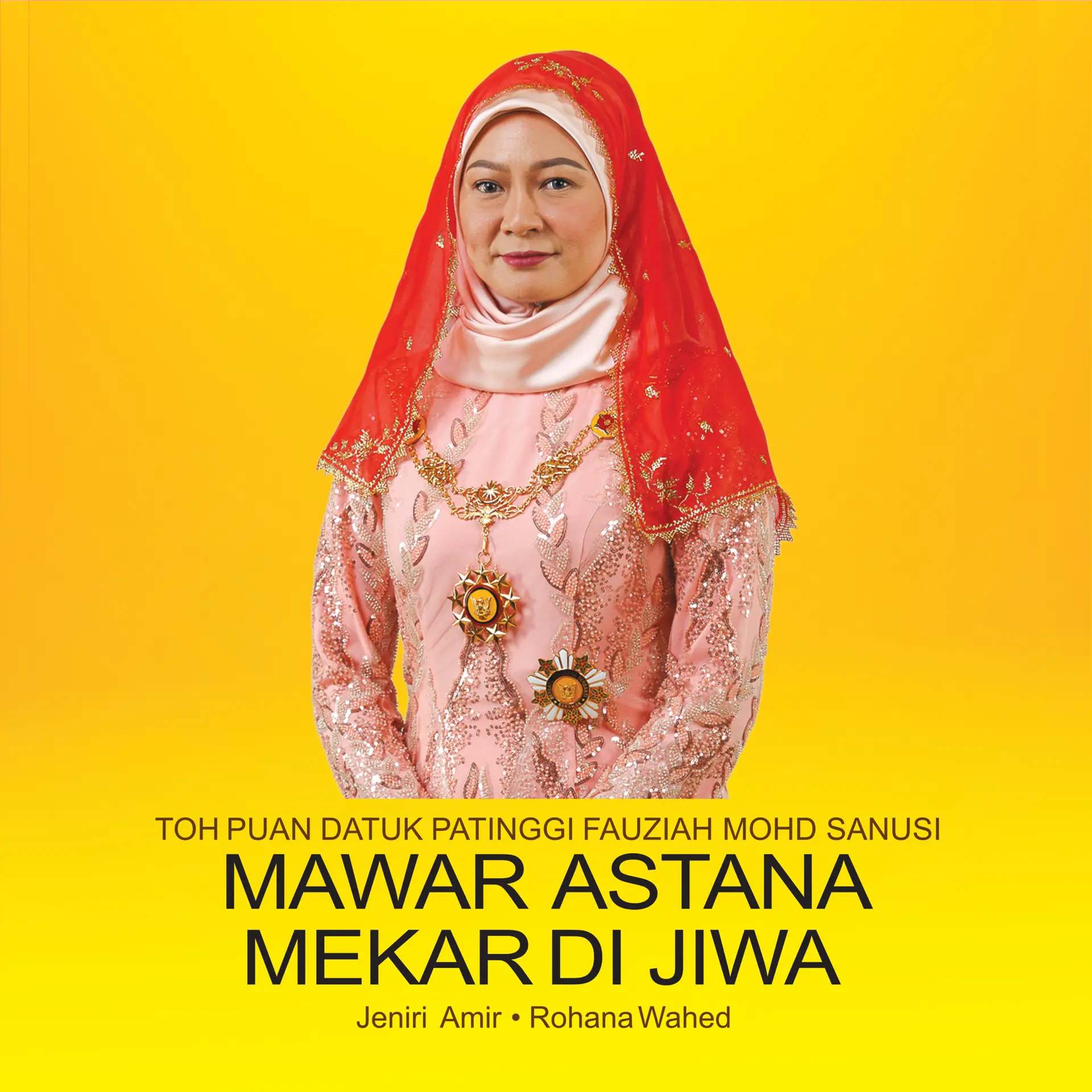
FOR Toh Puan Datuk Patinggi Fauziah Mohd Sanusi, the Astana Negeri Sarawak is more than just a official residence — it is a place of learning, sacrifice and resolute sincerity.
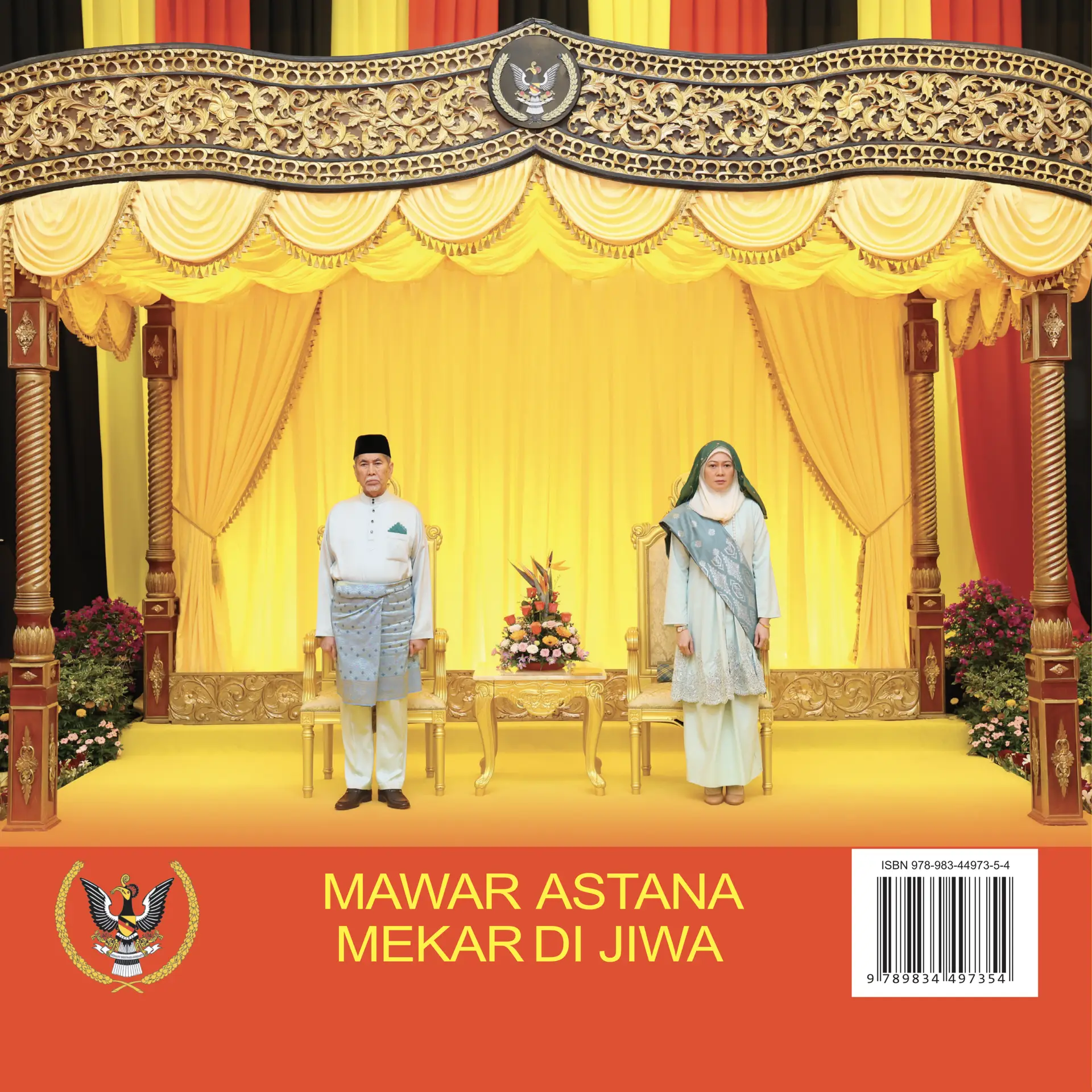
Within its storied walls, she carries herself with quiet dignity, fulfilling her role as the wife of Sarawak’s Head of State. Her unwavering resolve in embracing this new chapter of life serves as an inspiration to all who face unexpected turns in their own journeys.
When she stepped into this new phase, Toh Puan Fauziah brought a personality shaped by years of experience and resilience. The two decades she spent soaring through the skies were not apart from her present path — they became the very foundation on which her new responsibilities now stand.
As the wife of the state’s highest leader, she embodies a grace rooted in strength. Toh Puan Fauziah not only complements her husband but also stands as a poised and discerning individual in her own right.
At every courtesy call, official event, visit to welfare homes or community programme, she appeared with a heart deeply connected to the people. She understood their struggles and aspirations — a compassion nurtured through her years of observing countless lives from 30,000 feet above the ground.
WHEN YOU FIRST LEARNED THAT TUN PEHIN SRI DR HAJI WAN JUNAIDI TUANKU JAAFAR WOULD ASCEND AS THE EIGHTH HEAD OF STATE OF SARAWAK, WHAT THOUGHTS AND EMOTIONS FILLED YOUR HEART?
I remember that significant day vividly — 26 January, 2024. Tun was appointed that day as the eighth Head of State of Sarawak. I stood beside him, uneasy and more afraid than I ever imagined possible.
The night before, sleep was elusive. I lay awake, eyes glued to the ceiling as thoughts swirled in my mind.
Tun might have been familiar with the the responsibilities that lay ahead, but for me, it was uncharted territory — unlike anything I had ever experienced.
Later, in the car, as we travelled to the Istana Negara in Kuala Lumpur, where Tun was to receive the letter of appointment from the Yang di-Pertuan Agong, Al-Sultan Abdullah Ri’ayatuddin Al-Mustafa Billah Shah during the Ceremony of Conferment for the Appointment of the Head of State of Sarawak, my hands were icy cold.
I couldn’t conceal my anxiety. Tun noticed and softly inquired, “Why are your hands so cold?”
I managed only a faint smile, for inside me swirled a thousand emotions — anxiety, nervousness and fear all at once.
Having worked as a flight attendant for over two decades, I was no stranger to protocols while interacting with important people. Yet, this was a different scenario altogether.
I was no longer an observer behind the scenes — I was now in the spotlight, with every gesture and step carrying meaning. My actions were no longer mine alone; they represented an institution.
WHAT WERE YOUR THOUGHTS WHEN TUN PEHIN SRI DR HAJI WAN JUNAIDI TUANKU JAAFAR DECIDED TO RETURN TO SERVE THE NATION?
At first, when Tun mentioned he wanted to leave politics, I thought it was a wise choice. It seemed like a good idea because after serving the country for so long, he truly deserved a break. I was looking forward to spending more time together and enjoying a more peaceful, relaxed life.

Despite this, I had some concerns. You see, I had already left my job and with Tun retiring as well, I began to worry about how we would manage our finances. That concern grew when I thought about how much he spends each month.
One day, I asked him, “Sayang, do we have enough money to support our lives?” I did not mean to doubt his ability, but as a wife, I needed to know and be prepared.
I was surprised by Tun’s reaction. He looked at me and said, “No woman has ever asked me if I have money!” I laughed a little but felt confused. Tun then reassured me that he had always lived within his means, so there was nothing to worry about.
Just seven months after our marriage, Tun was appointed the President of the Senate. It required a significant decision because Tun was happy with retirement and had no intention of taking on new roles in the Federal Government. I never thought such an appointment would come.
AS SUCH, DID YOU FULLY SUPPORT TUN?
Even though our family had just begun to settle comfortably into retirement, Tun accepted the appointment and once again took on the responsibility of serving Malaysia as the President of the Senate. Deep down, I knew it was not an easy decision for him.
I started noticing Tun returning to his busy life filled with official duties. His schedule was packed and he travelled frequently. I remembered how he once said he wanted to stop working — yet here he was, taking on even more responsibilities.
I once told him, “You said you wanted to retire, but now you’re working more than ever.” Tun smiled and replied, “Be patient; this is part of my responsibility.” It was then that I realised that our lives were about to change.
I had imagined that after retirement, we would finally relax and enjoy our time together, free from work pressures. Instead, it felt like my days as a flight attendant — always on the move. But fate had other plans for us.
Seven months after Tun became President of the Senate, he was appointed the eighth Head of State of Sarawak. Our lives changed once again and I needed time to adjust. Still, as his wife, I must support Tun and understand his duties. I realised his dedication to our country remained as strong as ever.
COULD TOH PUAN SHARE SOME SURPRISING OR LITTLE-KNOWN SIDES OF TUN THAT PEOPLE MAY NOT BE AWARE OF?
Tun has a side that not many people know about. He might appear strict and serious to others, but at home, he’s full of humour. He’s a real tease, always finding ways to make me laugh.
Every day, he comes up with ways to tease me, then finds amusement in my reactions. Those who don’t know him well might be taken aback by his unusual and funny ideas.
Being with Tun is always a joy because he knows how to create a cheerful atmosphere at home. I often joke with him, saying, “You could be a ‘lawyer buruk’ (poor lawyer) because you’re a lawyer!”
Over time, one thing I’ve learned from being with Tun is that speaking with him requires understanding and sensitivity. Every word he says carries meaning.
Tun lives by a simple philosophy — we are already serious outside taking care of our duties and responsibilities. So, when we return home, it should be a place to unwind and enjoy family time.
Tun actually prefers a simple life and enjoys mingling with people from all walks of life. In the past, after early morning prayers, around seven, he would drive himself to his favourite coffee shop for breakfast — no escorts or bodyguards.
He loved going to markets like Medan Niaga Satok, buying fish, vegetables and other groceries, carefully choosing everything himself. Sadly, his current position means less freedom for him.
Leadership requires caution and limits his movements compared to before. These days, he needs escorts and security whenever he goes out, even though he enjoys meeting the public and living a relaxed life.
Furthermore, Tun also keeps work separate from family life. When he’s dealing with problems, he often becomes very quiet. We’ve learned to understand this — to give him space and time, and to avoid asking questions. I remember him once telling me that if he seems lost in thought, it’s best not to worry or press him for answers. From that, I learned that my role is to support him patiently.
I, therefore, make sure he has something to eat and drink. When he’s ready, he would open up to me about the problems he’s dealing with. This is the Tun I know.
WHAT WAS YOUR EXPERIENCE WHEN YOU FIRST STEPPED INTO THE ASTANA?
When I arrived at the Astana, my emotions were all over the place and words could hardly capture what I felt. Palaces had never been a part of my life, whether back home or in Sarawak. Just hearing the word ‘Astana’, made my heart race.
I vividly remember the moment I first walked into the Astana. My hands were cold and my heart was beating so fast. It felt like a big challenge because this wasn’t just any building.
The Astana has stood for centuries, serving officially since the era of James Brooke, Sarawak’s first Rajah. It is a place filled with the history and culture of Sarawak.
As an ordinary person, I admit I was nervous. I went from being a simple citizen to stepping into a completely different world, becoming the wife of the Head of State of Sarawak. This was no small task. It was a tremendous responsibility that has left a lasting impact on me.
HOW HAVE YOU ADJUSTED TO LIFE IN THE ASTANA?
Actually, we do not live at the Astana. Tun initially decided he didn’t want to stay in the Astana. To him, it felt like just an official building with a single room. Moreover, when Tun retired in 2022, his main wish was to be close to his children.
For many years, Tun lived alone in Kuala Lumpur, while his late wife, Dato Seri Feona Sim Abdullah, visited occasionally due to her work in Kuching. So, when it was finally time to retire, Tun’s only desire was to spend time with his family and no longer live apart from them.
When the appointment as the Head of State of Sarawak came, Tun remained firm in his decision not to reside at the Astana, saying that there were not enough rooms for his children. After discussions, the Sarawak Government kindly provided us with a residence at Kesuma Resort, Petra Jaya — a home spacious enough for all the children.
Although they are now married and have their own homes, Tun invited all of them to move in and live together. His sentiment was genuine: he longed for his children to join him at breakfast, lunch and dinner.
While not everyone can make it each time, the home is always filled with warmth and family presence. This has always been Tun’s dream — to finally cherish moments with his loved ones after so many years of living apart
TOH PUAN’S DAILY ROUTINE MUST CERTAINLY BE DIFFERENT FROM MOST PEOPLE’S. WOULD YOU MIND SHARING WHAT A TYPICAL DAY LOOKS LIKE FOR YOU?
My daily routine as a wife begins with knowing Tun’s schedule and programmes for the day. Usually, the personal assistant will prepare Tun’s schedule and itinerary, and at the same time provide me with a copy. In this way, I know where Tun will be each day and which functions he is required to attend.
As a wife, I want to ensure that all of Tun’s needs are well organised and complete, especially when it comes to his clothing. Tun rarely deals directly with the staff who manage household affairs. Therefore, I act as the liaison between Tun’s needs and the staff at home.
Every morning, I will ask Tun about the outfit he wishes to wear — which colour Baju Melayu, which shirt, trousers, coat, robe, or tie he prefers. Tun chooses his own clothes and my role is to make sure that they are prepared and neatly pressed by the staff.
I will give instructions such as, “Tun wishes to wear this and this, please ensure the garments are well ironed and hung properly.” To me, it is very important to ensure that Tun’s appearance is neat.
Tun, however, is a very practical person. He doesn’t mind whether his clothes are wrinkled or not. But I do care about such things, so I make sure everything is in order so that my husband looks smart, well-groomed and appropriately dressed for every occasion.
As for food, every day I will ask Tun what he would like to eat, whether he prefers something light or a heavier dish. From the first day of our marriage, I have always held firmly to the belief that my foremost responsibility is to be a wife to Tun. Whatever his needs — food, drink, clothing, rest, or even his sleeping hours — I take care of them.
For Tun, family always comes first. Therefore, my priority is also to ensure that the family is always well looked after. For instance, at every dinner, Tun will certainly ask, “Are the children eating at home tonight?” If they are, Tun wants all of them to sit together at the dining table. Tun seldom calls the children directly. If he does, it is usually through a message in our family WhatsApp group. But most of the time, I am the one who make sure the children are present at the table. I will knock on their doors and invite them to join us. For Tun, dining together as family is important. So, for me, my main duty is to be his wife.


In the past, if kitchen items such as turmeric or ginger ran out, I could simply go to the shop myself. But now, the situation has changed. There are guidelines and protocols I must follow. Whereas before I was free to manage such needs on my own, now every movement has to be coordinated and carried out according to protocol.
WHAT ABOUT OFFICIAL DUTIES?
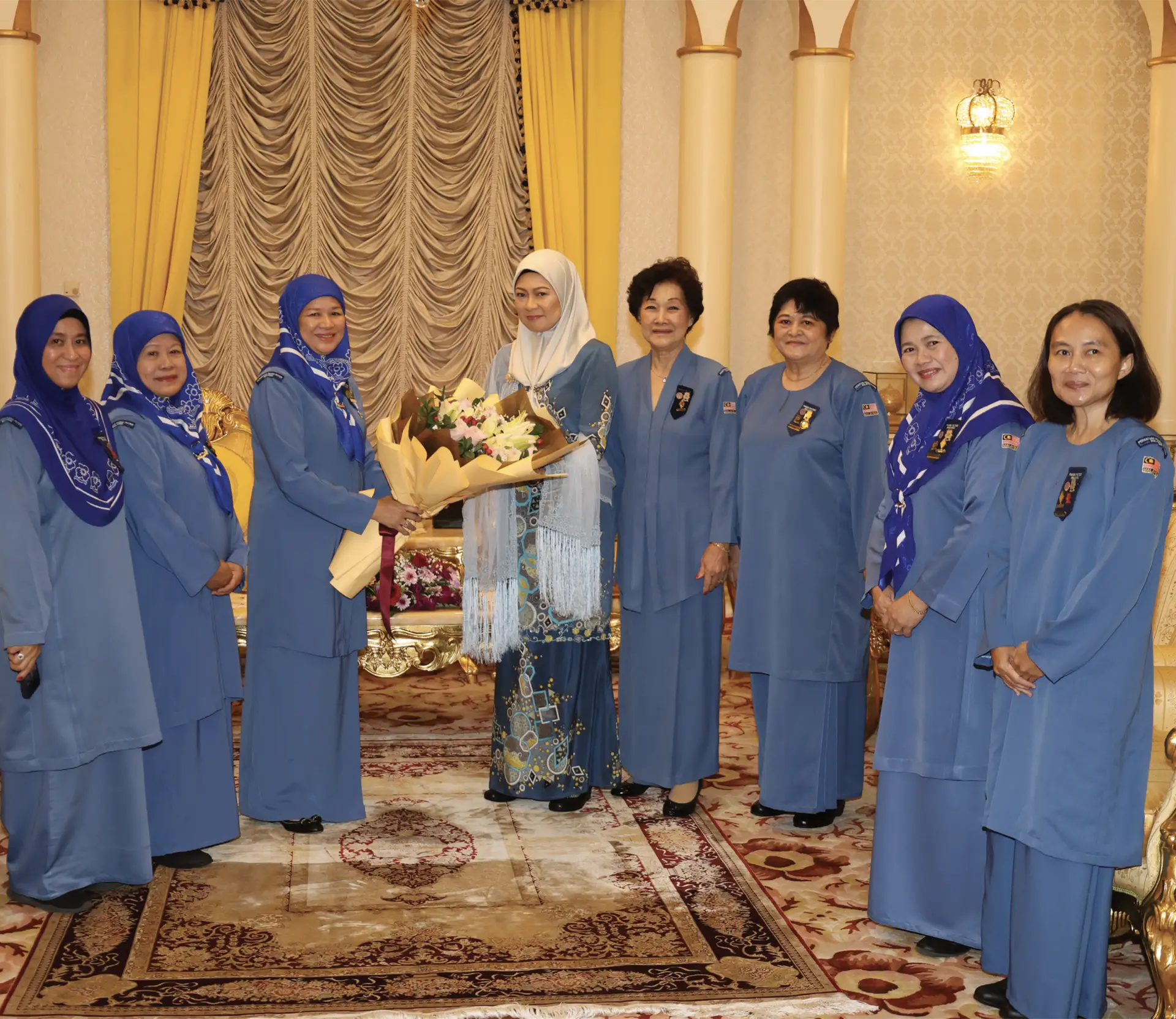
Most of Tun’s official duties take place at the Astana, especially for courtesy calls and formal ceremonies. I will accompany Tun whenever the function involves the presence of women, as that is his preference.
Whenever women are in attendance, I make sure everything is arranged in strict accordance with protocol and I inform the officer on duty ahead of time. Regardless of a woman’s rank or position within an organisation, she is still required to sit next to me. To Tun, this is proper and important.
However, if there are no women involved in the courtesy call, I will not attend. Still, I often accompany Tun to the Astana. There are times when Tun goes into his room to rest, takes off his coat or loosens his tie and that is when I ensure everything is in order and well-prepared for him.
This is my routine and duty as the wife of the Head of State of Sarawak. No longer do I handle household chores or run errands for groceries myself. My entire service is now devoted to Tun and the needs of the Astana.
HOW DO YOU MAINTAIN YOUR ELEGANT APPEARANCE, PARTICULARLY IN CHOOSING WHAT TO WEAR, TOH PUAN?
In the beginning, I used to choose my own outfits based on what I felt was appropriate. Naturally, I preferred something comfortable and easy to wear for any occasion — usually the traditional baju kurung. Now, I have an assistant who helps me select my outfits, including the matching headscarves, so all that’s left for me to do is style them.
However, I still make sure that every outfit I wear reflects both my personality and my role. I tend to favour practical clothing — nothing overly elaborate, yet still elegant. I also have a fondness for the colour yellow, which to me symbolises strength.
Above all, one thing I have learned is the importance of being true to oneself. Outward appearance is only a small part of who we are. What truly matters is sincerity in carrying out one’s responsibilities and the love we give to the people. That, to me, is far more valuable than any attire or title we may hold.
WITH SUCH A BUSY DAILY SCHEDULE, HOW DOES TOH PUAN BALANCE OFFICIAL DUTIES AND PERSONAL TIME?
From the very first day of our marriage, my personal time has always been the moments spent with Tun. Despite his serious demeanour in public, at home, Tun is actually a warm and humorous man who loves to joke and tease me.
At home, he is simply a husband — a down-to-earth person, very different from the formal image others see in public.
Most of our personal moments are spent during mealtimes, chatting over drinks, or relaxing while watching television together. Although I wasn’t fond of watching TV before, over time I started to enjoy it. In fact, now I’ve even begun to follow certain programmes — something I never used to do.
What fascinates me is how Tun and the children watch TV not just to be entertained but to learn as well. Whenever they watch a film or documentary, they delve into the background and history behind the story. For instance, if it’s a film about the Shaolin, Tun shares insights about the history behind it, including the conflicts between the Mongols and China.
Tun has an incredible ability to connect every story he watches to historical events because of his deep interest in history.
That’s how I, too, grew to appreciate it. Whenever we watch something related to the Shaolin, Tun draws connections to ‘The Legend of the Condor Heroes’, a classic that depicts life during the Chinese and Mongol wars in the 12th century.
Apart from these precious moments, most of my time is dedicated to my official duties as the wife of the Head of State of Sarawak.
WHAT HAS BEEN THE MOST SIGNIFICANT IMPACTFUL EXPERIENCE FOR TOH PUAN SINCE TUN PEHIN SRI DR HAJI WAN JUNAIDI TUANKU JAAFAR ASSUMED THE ROLE OF HEAD OF STATE OF SARAWAK?
To be honest, when we first moved into the official residence at Kesuma Resort, I was amazed by its facilities. The change was quite significant, but we are deeply grateful to have the opportunity to experience this new chapter of life.
We now live at Kesuma Resort instead of the Astana Negeri. However, this residence comes with its own unique set of challenges, as it was originally designed for a country with a hot and dry climate, whereas in Sarawak, we live in a tropical climate with frequent heavy rain.
One great advantage, however, is its first-class soundproofing system. Even during a downpour, we cannot hear the sound of rain from inside the house. The atmosphere remains calm and peaceful.
Another new experience for me is having to follow strict protocols in our daily movements. It feels very different from our previous life at home, where we could freely cook in the kitchen and manage everything according to our own preferences and comfort.
At Kesuma Resort, things are different. Meals are prepared for us by others. At first, it was quite challenging — especially since Tun has a habit of looking for cold rice and salted fish late at night for a simple meal.
The kitchen and food preparation areas are managed systematically by the assigned staff, who know exactly where everything is kept. Both Tun and I enjoy cooking and we are good at it, but here, that’s no longer part of our routine.
Instead, we are served food prepared by professional cooks. This is one of the many adjustments we’ve had to embrace.
WHAT HAS BEEN THE GREATEST CHALLENGE YOU HAVE ENCOUNTERED AS THE WIFE OF THE HEAD OF STATE OF SARAWAK?
To be honest, I find it difficult to use the word ‘challenge’ in this context. I grew up in a regular family where there weren’t strict rules or formalities. But now, with Tun’s role and responsibilities, I’m bound by many protocols that come with his position.
The freedom I once had — to move about freely — is now limited. I used to move around freely and do things myself without worrying about formal rules. For me, this is a major change. Every aspect, from attire and behaviour to the way I speak, must be handled carefully.
If any of these are overlooked, the implications fall on Tun. As much as possible, I do not want to cause any issue, even over something that may seem minor.
Adjusting to this new life and role has not been easy. It feels like stepping into a completely different world — one filled with customs, traditions and protocols that I must understand and master.
Initially, it was quite overwhelming, especially since Tun and I were used to living freely. But now, there are certain boundaries and formalities that must be followed. Still, I knew I had to learn.
I asked many questions, observed and read to help myself adapt. I had to learn quickly because this is not just a social role — it is also a responsibility to the state and its people. Over time, I began to find my rhythm and learned to embrace this role sincerely and with an open heart.
HOW HAS THE PEOPLE OF SARAWAK RECEIVED TOH PUAN THUS FAR?
From the very first day of our marriage, I have not been active on social media. I don’t have Instagram, Facebook, or Twitter. Therefore, I am not personally aware of the public’s perception of me.
However, Tun uses Facebook and through his account, I have been able to observe and understand some of the reactions from the community. Tun often shares the messages he receives on his Facebook page with me. We’ve received thousands of messages and they’re all very positive.
I’m deeply grateful to the people of Sarawak for accepting me as the wife of the Head of State of Sarawak. It’s rare to come across any negative comments about either Tun or myself. The people have not only accepted Tun as the Head of State but have also embraced me as his wife and companion in every aspect of his duties.


This acceptance makes me feel deeply touched and honoured. Nevertheless, I continue to do my best to adapt — not only as the wife of the Head of State but also as a citizen of Sarawak. I have taken the initiative to learn the local language and culture, even though mastering the dialects and accents is not an easy task.
For me, interest and willingness are crucial. As the wife of a Sarawakian, I also feel a responsibility to learn and understand the culture here. Alhamdulillah, Tun has been very supportive. He even published a book on Sarawak vocabulary, which has become one of my key reference materials. Through that, I have learned about the language, culture and character of Sarawakian.
I aspire to do my best in fulfilling this role. When I go out and meet people, I try to follow Tun’s example. I mingle warmly with everyone, while maintaining the dignity and respect that come with my position as his wife.
Alhamdulillah, the reception from the community has been truly wonderful. I would like to take this opportunity to express my heartfelt gratitude to all the people of Sarawak for their warmth and acceptance. May the bond we share continue to remain strong and be blessed always.