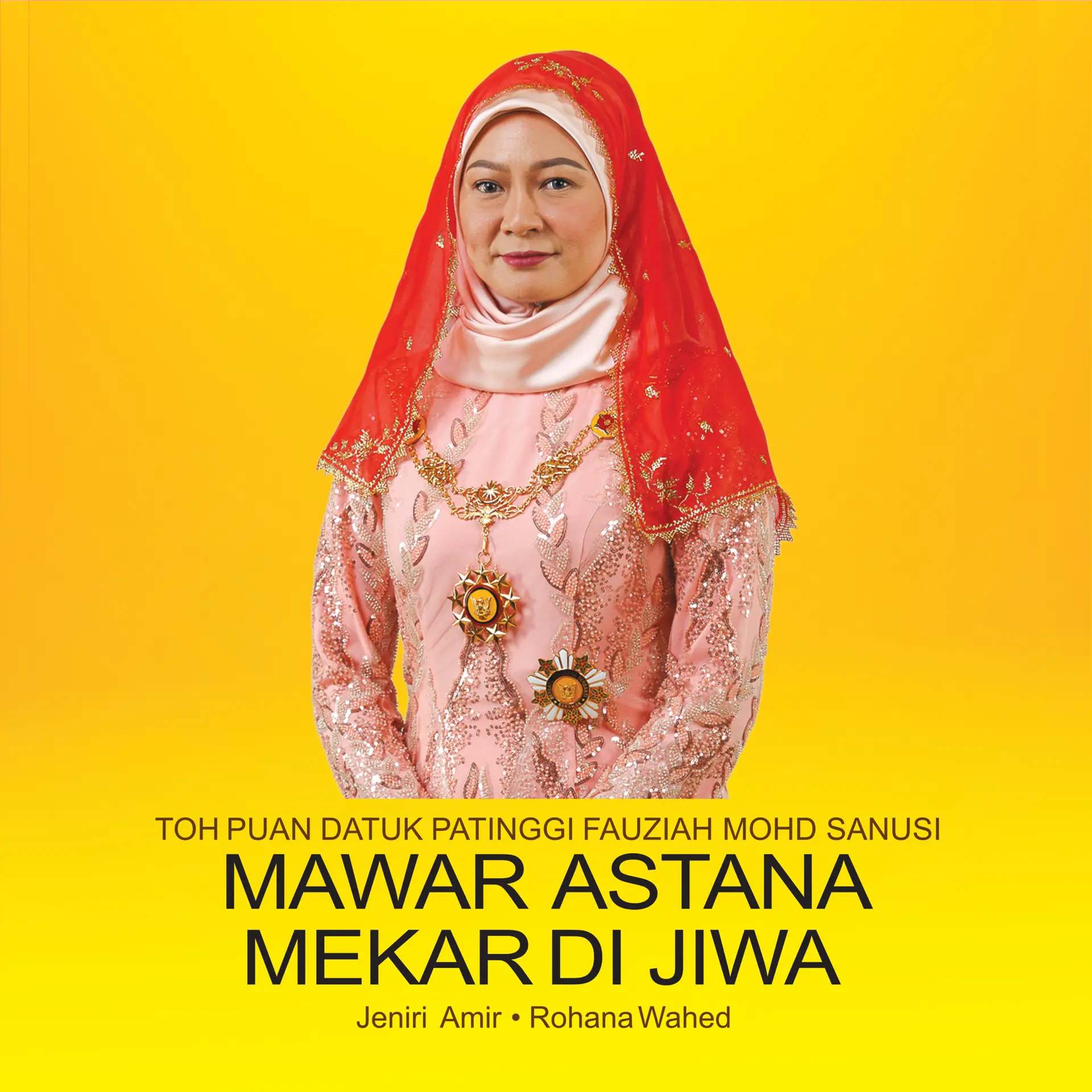
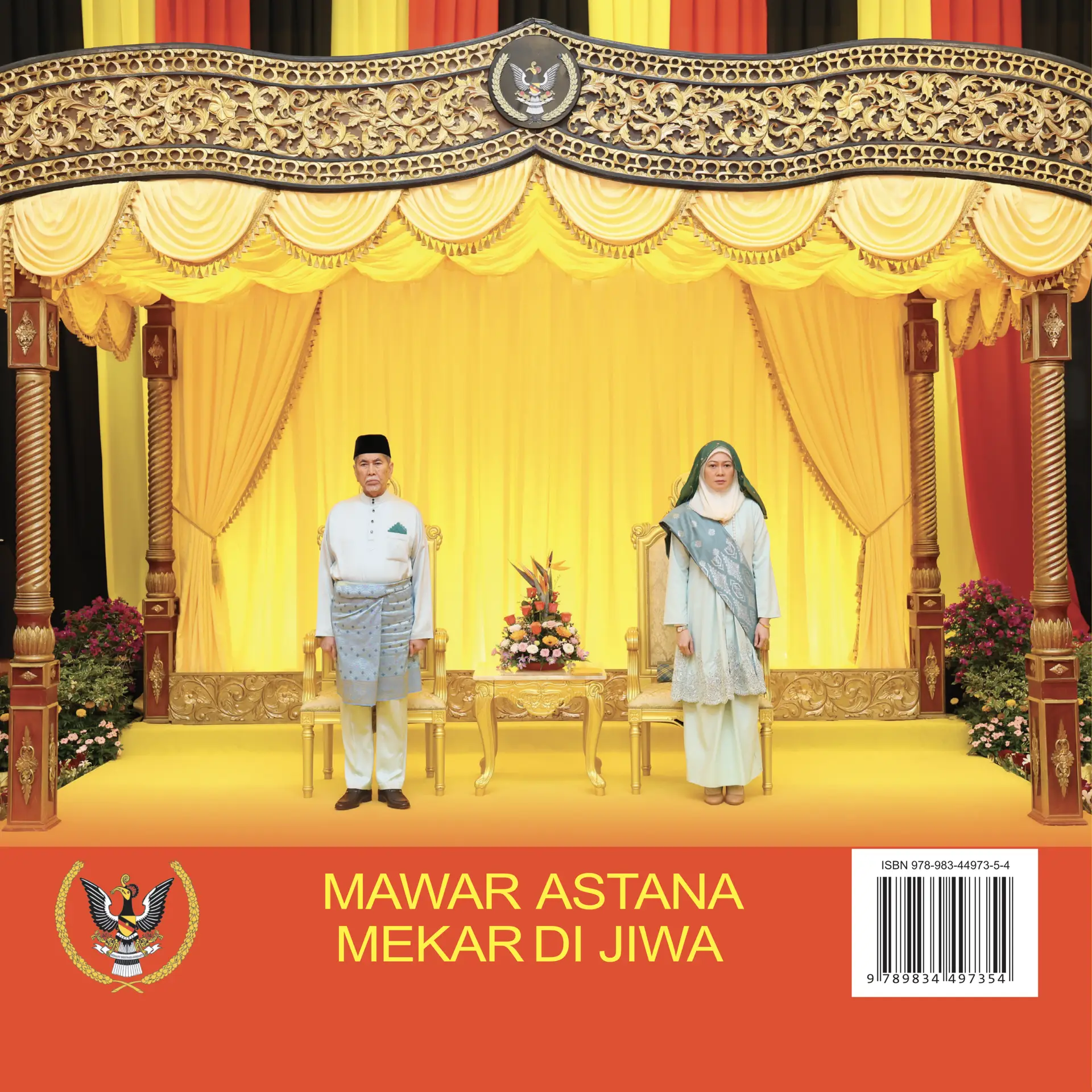
22 YEARS ABOVE THE CLOUDS
AT just 20 years old, Toh Puan Datuk Patinggi Fauziah Mohd Sanusi began her career as a flight attendant, a profession that demanded agility, discipline and a deep understanding of human needs and emotions.
She soared through the skies, navigating the highs and lows of a career filled with challenges and colourful adventures. Every flight, for her, was more than just a journey between destinations — it was a window into countless human stories, each offering a lesson on the essence of life.
There were moments of pure joy, witnessing the excitement of passengers boarding an aircraft for the first time. Yet there were also moments of turbulence, both literal and emotional — from sudden storms shaking the plane to the exhaustion that came with long hours and demanding passengers.
To her, every experience, whether sweet or bitter, was a valuable lesson — one that shaped her into the person she is today, instilling maturity and a deeper appreciation for every moment in life.
CAN TOH PUAN TAKE US BACK TO YOUR FIRST DAYS AS A FLIGHT ATTENDANT?
My more than two decades as a flight attendant truly changed my life. Initially, I only attended the interview to fulfil my mother’s request. I had no particular interest in aviation at that time.
But in the end, I fell in love with the job. It was not just about serving passengers, it was about patience, resilience, confidence and the ability to adapt to all sorts of situations.
This career gave me the opportunity to see the world, learn about new cultures and meet people from all walks of life. Honestly, the experience was invaluable and irreplaceable. I still vividly remember my first flight duty — from Kuala Lumpur to Penang. I was already 20 years old, yet I had never boarded a plane before. The moment I stepped inside the plane, everything felt unfamiliar. I began to feel dizzy and lightheaded. All the theories I had learned during three months of training suddenly felt overwhelming.
I didn’t know where the seats were, how to operate the safety buttons, or what the emergency procedures were. I was anxious, with countless thoughts racing through my mind. However, Alhamdulillah, I managed to persevere.
As a new crew member, I had to quickly adapt to many aspects, including the work culture and challenge of working with senior flight crew. In this industry, some senior crew members were kind and willing to guide us, but there were also those who liked to ‘put others down’ –– or simply put, bully the newcomers.
Being young and inexperienced at the time, I had to learn to handle myself wisely. Sometimes, even the smallest mistake would be used as an excuse to be scolded. But all of that taught me resilience and perseverance. I learned to be more efficient, independent and to prove my capabilities.
After a few months, I was qualified to serve on the Boeing 737-400 series. With this aircraft, I had the opportunity to fly to international destinations such as Madras (now Chennai) Japan and several other cities.
I was also fortunate enough to fly to London, Paris, Johannesburg and Cape Town. Those were incredible opportunities and I remain deeply grateful for having chosen this career path.
COULD YOU WALK US THROUGH THE PROCESS OF BECOMING A MALAYSIA AIRLINES CABIN CREW?
After passing the interview, all successful candidates are required to undergo an intensive three- month training course at the Malaysia Airlines Academy in Kelana Jaya, Selangor.

This course covers a wide range of essential aspects, including personal grooming and etiquette to safety procedures, first aid, aircraft knowledge, service protocols, general knowledge and communication skills.

To ensure every crew members remain competent and up to date with the industry standards, training and development programmes are provided.
These include the MH Five-Star Dining Programme, Super Memory Training, Inspiring a Brilliant Mind for Peak Performance, introductory courses on tea and coffee as well as team-building workshops, among others. Additionally, every three months, all flight crew are required to attend specific refresher courses to reinforce their skills and knowledge.
Furthermore, cabin crew members must sit for an annual examination on safety and first aid procedures. Every two years, they must undergo an announcement programme to refine pronunciation and update the announcement handbook according to current requirements. Weight checks are also conducted twice a year.
In addition, cabin crew are assessed through the Cabin Crew Performance Evaluation, conducted four times a year, while a competency assessment must be taken every two years.
From time to time, the Civil Aviation Authority of Malaysia (CAAM) may also carry out surprise inspections.
Medical checkups are conducted based on individual health conditions. Some crew members are required to undergo health screenings annually, while others may do so every two or five years, depending on personal health needs.
DID TOH PUAN ALSO UNDERGO SURVIVAL TRAINING?
Absolutely! Survival training is a mandatory part of the routine for every flight attendant. We are taught to be prepared for any possible scenario — from being stranded in a jungle to surviving at sea.
I personally participated in the Search and Rescue Exercise (SAREX) in Langkawi, which was conducted during the Langkawi International Maritime and Aerospace (LIMA) Exhibition.
This exercise was designed to test the capabilities of the SAR team in handling emergencies both at sea and in the air, while also training them on the latest procedures to enhance the efficiency and effectiveness of rescue operations.
The SAREX training often includes rescue demonstrations in Langkawi waters, utilising helicopters, warships and surveillance aircraft. Various security and rescue agencies collaborate to simulate emergency incidents — such as an aircraft crash or a sinking vessel.
It was incredibly challenging. Imagine being taken out to sea and left there to survive for two hours.
At that moment, our endurance and ability to stay calm under pressure were tested — both physically and mentally.
I also had to equip myself with various skills and professional courses to enhance my expertise in the aviation industry. Some of the training I attended included the Aviation Security Course (AVSEC), fire and evacuation training, emergency aid, aircraftspecific training for the A330, A350, A380 and B737.
In addition, I also attended several performance enhancement programmes such as the Winning Passion Programme and Inspiring Great Minds. All of these training sessions were designed to mould us into highly skilled professionals in the aviation field.
MANY PEOPLE THINK BEING A FLIGHT ATTENDANT IS A GLAMOROUS JOB. BUT WHAT IS IT REALLY LIKE?
Initially, I too believed that a flight attendant was all about looking attractive and serving food and drinks onboard.
However, I soon realised that this perception was completely inaccurate. The job is far more challenging — it goes well beyond serving meals and smiling at passengers.
We carry multiple responsibilities, sometimes acting as medical officers, police officers, firefighters, cleaners and much more.
In reality, this career is built upon rigorous training and governed by strict standard operating procedures (SOPs). It demands unwavering discipline, professionalism and a deep sense of responsibility.
We must always be prepared for any eventuality, including in-flight emergencies. Whether it is a fire onboard, a passenger suffering a heart attack, or a potential security threat, we are the frontline personnel responsible for ensuring the safety of every passengers.
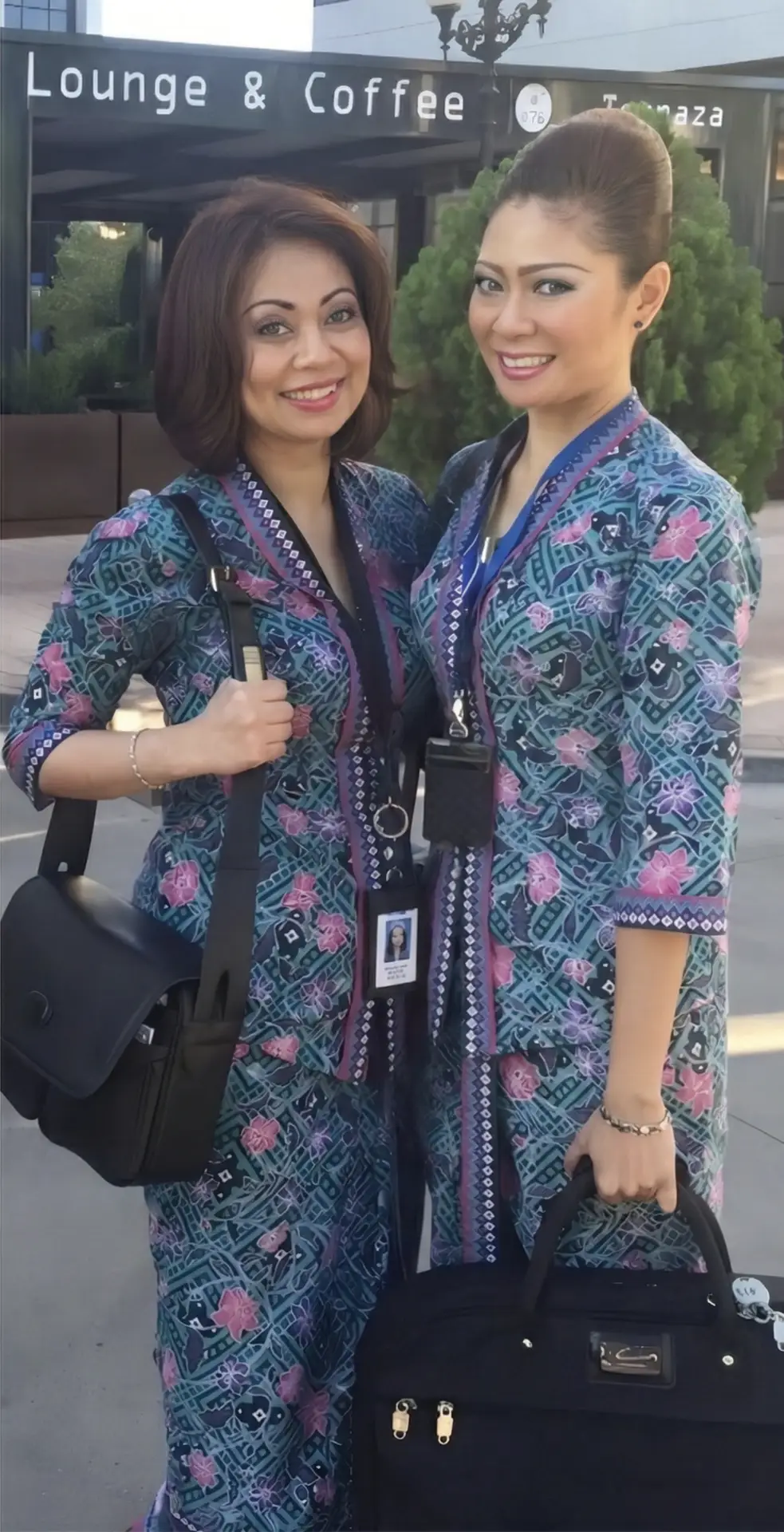
Discipline is the cornerstone of this career and it extends to every aspect of our daily lives. Our appearance must always be immaculate, neat, polished and flawless from head to toe. Makeup must follow precise guidelines, including the use of three perfectly blended eyeshadow shades.
Hair must be neatly styled, with not a single strand out of place and only two visible hairpins are allowed. Accessories such as rings, earrings, and necklaces must comply with specific size requirements. Wearing a watch is mandatory, uniforms must be perfectly pressed, shoes and handbags must always be spotless and polished and nails must be well-groomed. In short, everything must be absolutely perfect!
WHAT WAS TOH PUAN’S DAILY ROUTINE WHILE SERVING AS A FLIGHT ATTENDANT?
For me, maintaining a perfect appearance was essential. I would allocate about an hour to get ready. From my hair to my shoes, everything had to be neat and well put together. This discipline became a part of who I am and continues to shape my daily habits today.
I also place great importance on time management. After spending 22 years in the aviation industry, punctuality has become second nature. In my mind, even being a second late meant the plane had already taken off. For example, if my reporting time was at 6 in the morning, I would leave home around 4 in the morning.
This meant I had to start getting ready as early as 2 or 2.30 in the morning. Time management was crucial for me and it still is, even now. Meanwhile, upon arriving at the airport, I would attend a mandatory pre-flight briefing, usually held between 1 hour 45 minutes to two hours before departure, depending on the aircraft type.
This was no ordinary briefing — it was like preparing for battle. During the briefing, cabin crew members were asked various questions covering general flight details, the destination, safety aspects and more.
Questions on flight safety and first aid were among the most challenging. For instance, we were asked on how to use specific safety equipment, such as fire extinguishers on board, how to perform CPR, how to assist a choking passenger, how to operate the oxygen tank and which medications were available on the aircraft.
We were also expected to have general knowledge about our destination. For instance, if we were flying to Sydney, we might be asked about the city’s weather and temperature, its location and population, or even why the airport is named Kingsford Smith International Airport.
Such knowledge was important because we were the face of the airline. Imagine if a passenger asked a simple question and we couldn’t answer — that would be embarrassing, wouldn’t it? So, being a flight attendant was never just about looking good; it required knowledge, discipline and both physical and mental resilience.
We were also asked on possible scenarios that could occur on board, so everything had to be taken into account.
After the briefing, all cabin crew had to undergo an appearance check from head to toe. Every detail was meticulously inspected, including weight. If our Body Mass Index (BMI) exceeded the required standard, we could be suspended from duty for six months until we regained an ideal weight.
Meanwhile, during the walk to the aircraft, we had to maintain proper behaviour and composure, as professionalism in appearance was always emphasised, especially at the airport. This included posture and the way we walked.
Holding a mobile phone while walking was not allowed, let alone talking on it. If a call was urgent, we had to find a discreet spot or sit down before answering.
Even the way we sat in uniform had its own etiquette. We were not allowed to speak too loudly or laugh excessively.
Cabin crew members were also required to understand airport safety protocols, including situational awareness and proper conduct in crowded areas. These habits were instilled from the very beginning of our training and eventually became second nature.
Once onboard, the first thing I did was take the opportunity to call my mother before starting my duties. After that, I would check all safety equipment, complete preflight preparations and get ready to welcome passengers.
WHEN WELCOMING PASSENGERS, WHAT ASPECTS ARE GIVEN ATTENTION?
When welcoming passengers, the cabin crew will greet them with a smile, says “Welcome aboard,” inquires about their well-being, assist them in finding their seats and provide any necessary help. At first glance, this process may seem simple and straightforward.
However, it is actually a crucial moment for the cabin crew to assess the condition of the passengers. For me personally, I would observe not only the passengers’ physical condition but also their emotional state.
A quick assessment would be made of their behaviour while boarding — determining whether anyone might pose a potential threat to the safety of the flight and other passengers? I would also pay special attention to passengers travelling with babies, children, or elderly individuals to ensure they receive the necessary assistance.
I would also watch for passengers who appeared intoxicated or under the influence of drugs.
If I believed someone might become a security risk, I would report it to the flight supervisor, who would then inform the captain. If deemed necessary, the passenger could be removed from the aircraft before takeoff.
While passengers were boarding, numerous other issues often arose, such as baggage problems, seat disputes, health concerns, emotional distress, the need to calm those afraid of flying and many others.
It was also important to ensure that in the event of an emergency, the aircraft’s exit doors must always remain unobstructed. Therefore, I would ask passengers seated in the emergency exit rows whether they were willing to open the doors if required.
If they felt uncomfortable or were unable to take the responsibility, they would be reassigned to another seat. This precaution would ensure a smoother evacuation process in the event of an emergency.
Before takeoff, I also had to ensure that all passengers were seated, had fastened their seatbelts and had switched off their mobile phones or set them to flight mode.
As the aircraft prepared for departure, all cabin crew were required to take their assigned seats, fasten their seatbelts and silently review emergency procedures. The same process was repeated before landing. Although brief conversations might occur between crew members, safety always remained the top priority.
Once the aircraft had safely taken off, I would immediately begin my usual duties. At this stage, in-flight service would commence.
For me, providing the best service to passengers was a source of great satisfaction. From the very beginning, I had instilled sincerity, honesty and integrity in every task I performed.

HOW MANY COUNTRIES HAS TOH PUAN VISITED?
Many! About more than ten countries. Wherever Malaysia Airlines flew, that’s where I had the opportunity to work — not just in Asia but also in Europe, the Middle East and the Americas.
Back then, Malaysia Airlines had an extensive flight network. We flew to major cities such as Cairo, Istanbul, Jeddah, Tokyo, Los Angeles, New York, Stockholm and South African cities like Johannesburg and Cape Town.
In Europe, the routes included Paris, Amsterdam, Frankfurt and Madrid — all part of airline’s network at the time. However, international routes have since been significantly reduced. Previously, Malaysia Airlines had numerous destinations across Europe and the Americas, but today, London remains the only key route.
Regardless, being a flight attendant was a golden opportunity and an incredibly valuable experience. I had the chance to travel and explore many countries, especially at a time when such opportunities were rare. For me, working in this industry was truly an honour and a blessing.
WHICH COUNTRY IS YOUR FAVOURITE?
Among the many countries I have visited, whether for work or leisure, my top three favourite destinations are Cape Town in South Africa, Auckland in New Zealand and Amsterdam in the Netherlands.
In Cape Town, I absolutely love visiting Table Mountain and have had the opportunity to hike it several times. I never tire of going there because of the breathtaking scenery, accompanied by the gentle breeze which creates such a truly soothing experience.
In Auckland, my favourite places include Waitemata Harbour and Rotoroa Island. The natural beauty of both places is simply stunning and brings a deep sense of peace.
Meanwhile, in Amsterdam, I adore the colourful tulip fields, which are incredibly beautiful. Whenever I have the chance to visit during spring, around April or May, I always make it a point to immerse myself in the mesmerising view of the blooming tulips.
WHAT IS TOH PUAN SWEETEST MEMORY AS A FLIGHT ATTENDANT?
Throughout my career with Malaysia Airlines, I have cherished many wonderful memories, whether with passengers, colleagues, or acquaintances I met along the way. However, the most beautiful and meaningful memory for me was the opportunity to bring my son, Muhammad Fida’yi Tasnim, along with me while I was on duty. I feel incredibly blessed to have been able to take Tasnim to various international destinations, especially since the airline offered very affordable flight tickets for staff.
Tasnim was truly a lucky child. Not everyone gets the chance to travel abroad without incurring significant expenses. Each time he accompanied me on my flights, the happiness I felt was indescribable.
Beyond giving him the opportunity to see the world, I also wanted him to witness firsthand my dedication and hard work in earning a living. Alhamdulillah, Tasnim started travelling with me when he was just 10 years old.
LOOKING BACK, WHAT WERE SOME OF THE BIGGEST CHALLENGES YOU ENCOUNTERED?
The challenges of being a flight crew member can be divided into two main aspects. First, dealing with passengers. There were times when I had to handle difficult passengers who seemed impossible to please.
No matter what we did, they always found something to complain about. Imagine being on a 14-hour flight with such individuals — it could turn into chaos. Unlike machines, people have emotions and every personality is different. Honestly, dealing with human emotions is not an easy task.

Still, I always handled such situations professionally, never allowing my own emotions to surface, even when faced with unreasonable behaviour. I never argue or engage in disputes with them. Instead, I maintained a high standard of service, even if I was being scolded, I kept smiling. In the end, some passengers would eventually apologise once they realised their mistake.
The second challenge was dealing with colleagues, including both cabin crew and technical crew. I personally experienced workplace bullying. It was a painful and difficult chapter in my career that left a lasting impact on me.
Once, during a domestic flight, I was severely bullied to the point that I broke down in tears. At that moment, I was truly determined to resign as soon as I returned home. When my father came to pick me up after the flight to bring home to Kampung Setia Jaya, Taman Melati, he, as usual, asked how my journey went.
Just as we were laving the Subang Hub building, I saw the leading stewardess who had bullied me waiting by the roadside, for a taxi. My father, stopped the car, rolled down the window and asked her where she lived. I kept my eyes straight ahead, unwilling to make eye contact with her. She replied that she lived in Wangsa Maju and my father immediately got out of the car, took her bag. He then offered her a lift since we were heading in the same direction.
Throughout the journey, I remained silent, while the stewardess chatted away with my father. Upon arriving at her home, I asked my father to continue driving without shaking hands with her. On the way home, I finally told him everything — that the woman he had just given a lift to was the very person who had bullied me so harshly.
My father’s expression turned sombre. I could sense his disappointment and anger — not because of the situation, but because it concerned his daughter’s dignity. When we reached home, I recounted the incident to my mother. She urged me to quit my job immediately. However, I decided to stay, as I was still bound by a two-year contract. For two days at home, the bullying incident kept replaying in my mind.
To my surprise, after my break, I was once again assigned to work with the same leading stewardess. My heart felt heavy and I almost turned back home. However, I steeled myself and went to work as usual. Perhaps because I showed no resentment and continued to behave professionally, her attitude eventually changed. From that moment onward, I was no longer a target of her bullying.
DID YOU EVER FACE ANY TERRIFYING OR HIGH-PRESSURE SITUATIONS WHILE FLYING?
Throughout my career, I have encountered several nerve-racking experiences, but one incident that truly tested my resilience occurred during a flight to China.
At that time, our aircraft had received clearance to land, while a China Airlines aircraft had been granted permission to take off. Due to a miscommunication, both aircraft ended up on the same flight path at the same time.
I still remember the moment vividly. Imagine the situation: China Airlines plane was accelerating for takeoff, while our Malaysia Airlines aircraft was in the process of landing. Fortunately, our captain reacted swiftly and made a split-second decision that saved everyone on board.
As soon as he spotted the China Airlines aircraft ahead, he immediately pulled the controls and executed a sharp, steep climb to avoid a collision. The situation was terrifying. Passengers screamed in fear and all I could do was pray.
Despite feeling anxious myself, I had to maintain a calm and reassuring expression — showing panic would only worsen the situation. The leading stewardess and I made every effort to remain calm. Once the situation stabilised, she immediately contacted the cockpit for further instructions in case any additional action was required.
Shortly after, the captain instructed us to prepare for an emergency landing. Once the aircraft landed safely, the technical and cabin crew had to file reports on the incident. The captain later explained that the situation had arisen due to a communication error between the two aircraft.
On the way home after that incident, I couldn’t stop thinking about one thing –– what if the aircraft’s radar screen had suddenly gone blank? During landing, radar screens can experience interference if passengers fail to switch off their electronic devices. Such interference can cause the radar display to go blank.
If that had happened in our situation, the outcome could have been catastrophic. This experience reinforced how crucial it is to follow aviation regulations, as even minor disruptions can have serious consequences.
In such situations, all we can do is place our trust in fate. When the tragic incidents of Malaysia Airlines flights MH370 and MH17 occurred in the same year — MH370 in March and MH17 in July — it reminded me profoundly of how fragile life is. When our time comes, it can happen anywhere.
Another heart-stopping experience happened while the aircraft was taxing towards the parking bay at KLIA. Suddenly, a catering truck lost control and crashed into the aircraft’s wing. Thick smoke started billowing out, followed by sparks that quickly spread toward the aircraft’s engine! The incident sent passengers into a panic, with some screaming in fear. Even the truck driver leapt out of his vehicle in shock.
In such a chaotic moment, we, as the cabin crew, had to remain composed. We were trained to control our facial expressions to prevent alarm. Even though my heart was racing, I had to keep my face calm and reassuring. One sign of fear from us could intensify the passengers’ panic. Therefore, in this profession, discipline and composure are absolutely critical.
At that moment, I carefully assessed our options. Thinking that, deploying the emergency slide could worsen the situation by allowing oxygen to fuel the fire. Thankfully, the captain assured us that the situation was under control.
We were instructed to wait for the passenger stairs to be prepared for a safe evacuation. Fortunately, since the incident occurred at the airport, the fire brigade arrived swiftly and managed to extinguish the flames before they spread. Alhamdulillah, everyone was safe. As for turbulence — those sudden, violent shakes that rattle the aircraft — it’s simply a normal part of flying. Every cabin crew member must be mentally prepared to handle it.


Despite the many challenging and frightening moments I have faced they have never changed my daily routine as a flight attendant. Every day in the skies brings its own set of challenges, but resilience, discipline and composure remain the key to carrying out my duties effectively.
HAVING DEDICATED OVER TWO DECADES TO THE AVIATION INDUSTRY, WHAT CORE VALUES OR DISCIPLINES DOES TOH PUAN CONTINUE TO UPHOLD TODAY?
Discipline has always been the cornerstone of my career. In the aviation industry, punctuality is crucial, as is being prepared for any situation — whether it involves an in-flight emergency, customer service, or safety procedures.
Even today, the discipline I practised throughout my career remains an integral part of my daily life. It has become second nature to me and I firmly believe that discipline is a fundamental element in any profession.
WHAT ARE THE MOST IMPORTANT LESSONS YOU’VE LEARNED THAT YOU’D LIKE YOUNG PEOPLE TODAY TO REMEMBER?
Many people perceive the role of a flight attendant as merely about appearance — impeccable makeup, well-groomed attire, graceful poise and excellent communication skills. However, behind this image lies a profession built on rigorous and comprehensive training that encompasses far more than what meets the eye.
Personally, I have always practised staying calm in every situation. Even when dealing with demanding or emotional passengers, I choose to smile and remain composed. To be a competent, knowledgeable and welltrained flight attendant, one must undergo regular training and courses.
Those who have served on aircraft such as the B747 and A380 have undergone intensive training and are equipped with the skills to handle various emergency situations. In any circumstance, we must remain calm, ready to assist others and not become individuals who need to be helped.
Beyond this, learning must never stop. I firmly believe that to become an expert in any field, one must continue to seek knowledge and their understanding of their duties.
This applies to all professions — whether as a flight attendant, chef, driver, or any other role. Every individual should have a thorough understanding of their role and responsibilities.
Such understanding is not reserved only for those in top positions like the chief secretary or deputy chief secretary, but for everyone within an organisation. Ultimately, each of us must recognise our duties — not just to ourselves, but also to our nation, state and family.
Every task should be carried out with knowledge, sincerity and an awareness of the trust placed in us. That is the lesson I wish to share with future generations.